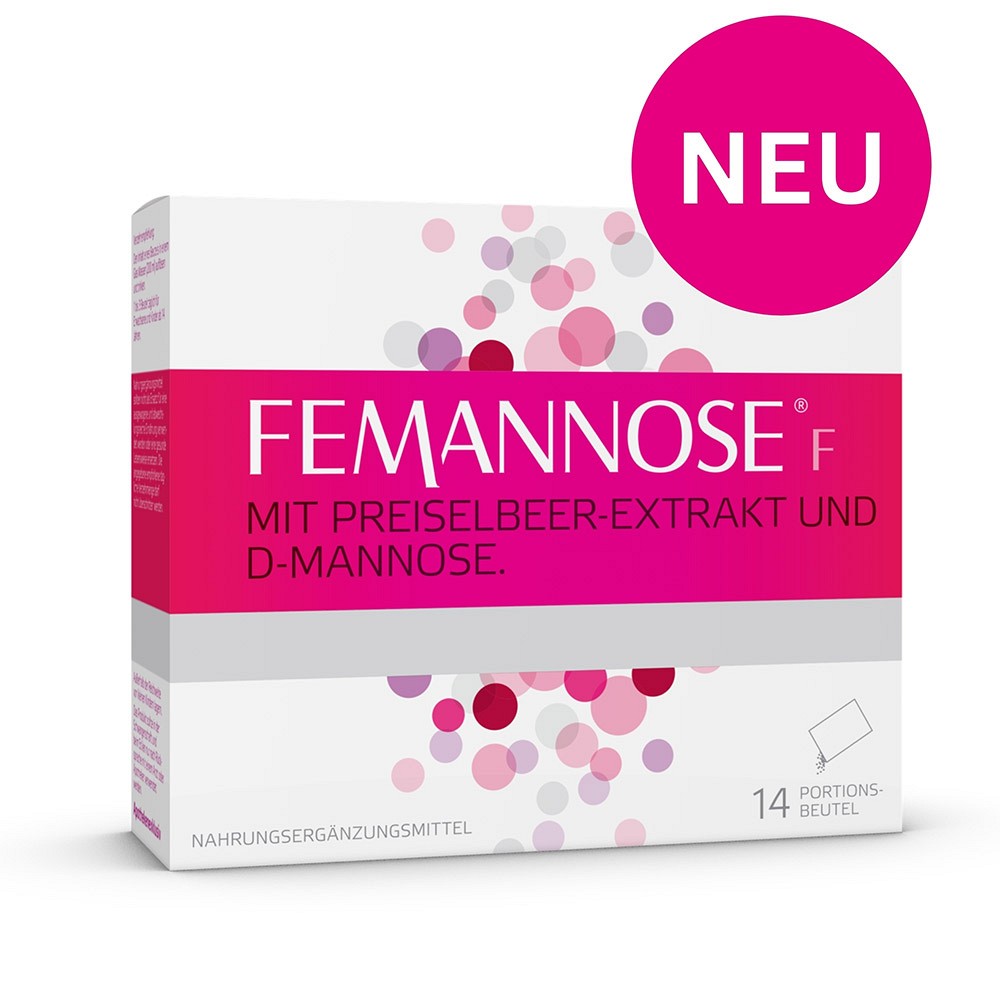
Femannose® N for the prevention and supportive treatment of cystitis and uncomplicated urinary tract infections.
Femannose® N contains the natural active ingredient D-mannose, a simple sugar found in the body with a unique mode of action: the natural sugar ensures that inflammation-causing E. coli bacteria in the bladder are coated and thus blocked. This means that the bacteria can no longer attach themselves to the bladder mucosa and cause inflammation. Instead, they are simply flushed out the next time you go to the toilet.
Symptoms and causes of cystitis
A bladder infection is unpleasant and affects women more often than men. The reason for this is that women have a shorter urethra, which means that bacteria can reach the bladder more quickly and cause inflammation. In most cases - around 90% - the cause is the intestinal bacteria Escherichia coli (E. coli).
A bladder infection - also called cystitis - is characterized by typical symptoms such as a constant urge to urinate, burning when urinating, cloudy, unpleasant-smelling urine or abdominal pain. If there is blood in the urine, you should definitely see a doctor. Women over 50 are particularly likely to suffer from cystitis during menopause due to hormonal changes. But younger women between 20 and 40 also have to deal with it more frequently. Frequent sexual intercourse, which irritates the mucous membranes, stress, cold feet, wet swimwear, a weakened immune system or lack of sleep promote infection.
Effective prevention and supportive treatment of cystitis
The tasty drinking granules Femannose® N can be used to support the treatment of an unpleasant bladder infection, but can also be used to effectively prevent it.
Convincing: 96% of users are satisfied with the use of Femannose® N – their expectations were met or even exceeded*.
Intake and dosage for the supportive treatment of cystitis
In the case of a bladder infection, three sachets should be taken daily until the third day of the infection. On the fourth and fifth day, two sachets daily are sufficient.
Around To avoid recurring bladder infections or for prevention , we recommend taking 1 sachet daily. Dissolve the drinking granules in a glass of water and then drink. Femannose® N can be taken over a continuous period of thirty days.
In order to generally relieve the symptoms of a bladder infection, it is important to drink around two liters of fluid a day to flush out the pathogens. Heat can relieve pain in the lower abdomen and also promotes blood circulation. Rest and sleep strengthen the immune system.
If there is no noticeable improvement within 3 days, you should consult a doctor.
More tips for preventing cystitis
- Change wet clothes quickly after swimming
- Do not suppress the urge to urinate, but go to the toilet immediately
- Do not irritate the intimate area with excessive hygiene so that the acid mantle of the mucous membrane remains intact
- Urinate promptly after each sexual intercourse
- can also be used during pregnancy and breastfeeding after consulting a doctor
- for adults and children aged 14 and over
- natural and vegan; free from sucrose, gluten, lactose and preservatives
- Femannose® N is available in pack sizes of 14, 30 and 2x30 sachets.
FAQ
How do I recognize a urinary tract infection?
Urinary tract literally refers to the path that urine takes from the kidney to the point of excretion at the urinary opening. Urinary tract infections usually start from the outside inwards, the first stage being the inflammation of the inner tissue of the urethra, which leads from the urinary opening to the bladder. The symptoms are similar to those of a bladder infection: a strong urge to urinate, a burning sensation when urinating and even at rest, accompanied by lower abdominal pain, and in women there may also be discharge.
How do I recognize a bladder infection?
In the case of a bladder infection, the pathogens have reached the bladder from the outside via the urethra. The inflammation causes the bladder to send the signal to urinate more often: frequent urination is one of the classic symptoms of a bladder infection. Only a small amount of urine is excreted at a time, accompanied by burning and pain that can extend into the lower abdomen in the form of cramps. The urine can be cloudy or even contain blood, with even small amounts causing a reddish color.
How can I prevent a bladder infection?
The main cause of cystitis is E. coli bacteria from the intestines that enter the body from outside. To avoid this, the following preventive measures should be observed:
1) In women, the anus and urinary opening are close together. To prevent germs from getting from the intestine to the urinary opening, always clean and dry the anus backwards towards the back, especially after a bowel movement.
2) Urinate no later than 15 minutes after sex
3) To ensure that the natural flora of the mucous membrane remains intact, use a perfume-free shower gel or pH-neutral intimate lotion for cleaning
4) Always drink enough: This is good for the entire organism and continuously flushes the urinary tract - so fewer bacteria can settle there.
From what age can Femannose® N be used?
Femannose® N is for adults and children over 14 years.
Does D-mannose pose a risk for diabetics?
Since D-mannose is hardly metabolized, diabetics can also take D-mannose. Most of the D-mannose enters the blood unchanged, is excreted via the kidneys and reaches the bladder and urinary tract.
Are there any interactions (e.g. with painkillers, birth control pills)?
There are no interactions with medications such as painkillers or hormonal contraceptives (“the pill”). Other medications in the body are also not affected by D-mannose. Products such as dietary supplements should be taken at least 2 hours apart.
Are there any side effects?
At the dosage necessary for supportive treatment, no side effects have been observed, except for individual intolerance, which may lead to nausea, flatulence and loose stools.
*Yougov 2018 – Report for MCM Klosterfrau Vertriebsgesellschaft mbH; User survey on Femannose® N